HISTORY
On June 19, 1865, Maj. Gen. Gordon Granger, who had fought for the Union, led a force of soldiers to Galveston, Texas, to deliver a very important message: The war was finally over, the Union had won, and the federal government now had the manpower to enforce the end of slavery. The announcement came two months after the effective conclusion of the Civil War, and even longer since President Abraham Lincoln had first signed the Emancipation Proclamation (January 1, 1863), but many enslaved Black people in Texas still weren’t free, even after that day.1
“The people of Texas are informed that, in accordance with a proclamation from the Executive of the United States, all slaves are free. This involves an absolute equality of personal rights and rights of property between former masters and slaves, and the connection heretofore existing between them becomes that between employer and hired labor. The freedmen are advised to remain quietly at their present homes and work for wages. They are informed that they will not be allowed to collect at military posts and that they will not be supported in idleness either there or elsewhere.” —General Orders, Number 3; Headquarters District of Texas, Galveston, June 19, 1865
Featured Event
Monday, June 13, 7 p.m.

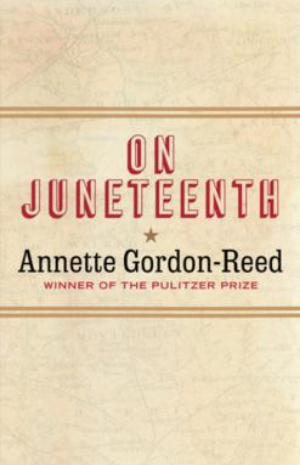
The Hudson Library & Historical Society will host a live virtual streaming event with Annette Gordon-Reed, author of the New York Times bestseller On Juneteenth. The sweeping story of Juneteenth’s integral importance to American history, this book was named one of the Times Critics’ Top Books of 2021 and one of the best books of the year by the Washington Post, TIME, NPR, and others. This is a one-time event and will not be recorded.
This program is made possible, in part, by a grant from the Ohio Humanities Council, a state affiliate of the National Endowment for the Humanities.
Recommended Reads
A list of recommended titles on the history of Juneteenth is available for all ages at the Hudson Library & Historical Society.
The Hudson Library & Historical Society offers book club sets. A selection of book club titles comprising a wide variety of reading choices including bestsellers, biographies, award winners, nonfiction, and classics. Each set includes multiple copies of a book and a book club guide with information about the author and discussion questions.
Walking Tours
Thursday, June 9, 10 a.m.
Hudson, once called the “citadel of abolitionism,” was an active stop on the Underground Railroad and was the childhood home of abolitionist John Brown. Discover the homes, sites and people that played a significant role in the anti-slavery movement of pre-Civil War Hudson. All walking tours are weather dependent and meet at the entrance to the library. Remember to wear comfortable shoes and weather-appropriate clothing.
History comes alive with the Hudson Library & Historical Society’s brand-new virtual walking tours of historic Hudson. Each self-guided tour incorporates the carefully researched content from the library’s popular in-person walking tours enhanced with a rich multimedia experience including digitized historic photographs and documents sourced from original material from the library’s archives. Walk or drive these mobile-friendly tours, accessible via Android or Apple phones. Or, experience the tours from your computer without leaving home. This virtual tour features 16 stops (and 9 bonus stops) at key sites that played a part in the anti-slavery movement in the town.
Additional Resources
- Celebrating Juneteenth, by Laura Goertzel (Kids National Geographic, 2021)
- Federal Writers’ Project: Slave Narrative Project, Vol. 16, Texas. Library of Congress Part 1. Part of Born in Slavery: Slave Narratives from the Federal Writers’ Project, 1936 to 1938. Please note that these texts include difficult language and descriptions of violence.
- Federal Writers’ Project: Slave Narrative Project, Vol. 16, Texas. Library of Congress Part 2. Part of Born in Slavery: Slave Narratives from the Federal Writers’ Project, 1936 to 1938. Please note that these texts include difficult language and descriptions of violence.
- Federal Writers’ Project: Slave Narrative Project, Vol. 16, Texas. Library of Congress Part 3. Part of Born in Slavery: Slave Narratives from the Federal Writers’ Project, 1936 to 1938. Please note that these texts include difficult language and descriptions of violence.
- Federal Writers’ Project: Slave Narrative Project, Vol. 16, Texas. Library of Congress Part 4. Part of Born in Slavery: Slave Narratives from the Federal Writers’ Project, 1936 to 1938. Please note that these texts include difficult language and descriptions of violence.
- The Historical Legacy of Juneteenth, (National Museum of African American History & Culture, 2019)
- Juneteenth, (Kids Britannica)
- Juneteenth.com
- Juneteenth: A Celebration of Freedom, (National Park Service)
- Juneteenth: A Celebration of Resilience, (National Museum of African American History & Culture)
- National Archives Safeguards Original ‘Juneteenth’ General Order, (National Archives, 2020)
- Slavery Didn’t End On Juneteenth. What You Should Know About This Important Day, (NPR, 2001)
- Purdue University Juneteenth Resources
- What Is Juneteenth?, by Henry Louis Gates, Jr., (PBS)
- What Is Juneteenth? How to Explain the History of the Holiday to Kids, by Adrienne Farr (Parents,2020)
- Slave Voyages: Trans-Atlantic and Intra-American Slave Trade Databases
1Sharon Pruitt-Young. “Slavery Didn’t End On Juneteenth. What You Should Know About This Important Day.” NPR. https://www.npr.org/2021/06/17/1007315228/juneteenth-what-is-origin-observation.